
Overall Themes – Trouble Brewing
Trouble Brewing is the best script for new players and storytellers as this script has characters and abilities seen in other social deduction games. Where Trouble Brewing stands out is how it uses themes of good vs evil, death, deception in forms of intoxication and poisoning, sacrifice, judgment, hidden knowledge, rituals and symbolism in the names, visuals and flavor text produced by the official wiki, to enhance the experience of the game and allowing new comers to push past the pre-existing metas that linger from other social deduction games.
Townsfolk
-

Empath
The Empath is a townsfolk that learns how many of their living neighbors are evil. This connects the empath, the sacrifice, hidden knowledge and judgment. The Empath will only learn new information when one of their living neighbors dies in the day or at night. This makes the Empath willing to sacrifice others for information. In the same way Odin sacrifices himself for knowledge, the Empath can sacrifice their living neighbor in order to gain more knowledge (Odin – the one-eyed all-father). The hidden knowledge of player’s alignments is very important but can always not be taken seriously, similar to Cassandra, cursed to know the truth but never be believed (Britannica, Cassandra). The Empath, especially when kept alive for a long period of time, can cause suspicion to the rest of the town if your information is true, even if it is.
-

Fortune Teller
The Fortune Teller is a town spoke that has ties to good vs evil, spirituality and rituals. Each night the Fortune Teller looks into their crystal ball as a part of their ritual for divine communication with the storyteller. They select two people and will learn if one of them registers as the demon. However, the Fortune Teller’s ability comes with a built in red herring, a townsfolk that will register as the demon. This relies on the Fortune Teller to use their sense of judgment to decipher who is truly good, and who among the town is truly something unholy. This links to the bible as the fortune teller could be seen as a profit, and it’s the player’s responsibility to ensure they speak the truth and not falsely accuse the red herring as they could fall under suspension and lead the town into thinking they’re bluffing and are actually a false prophet (Beware of false teachers 2022).. This makes the Fortune teller rely on their moral judgment to determine the correct course of action to prevent the town from falling under the demon’s influence.
-

Ravenkeeper
The Ravenkeeper is a town spoke that gains its information upon death. When the Raven keeper dies at night they get to pick another player and learn what their role is. Ravens have a connection to death as they are scavengers, eating those that are already dead while in Norse myths, ravens represent knowledge as Odin has two ravens, one representing memory and the other thought (Hugin and Munin: Odin’s Ravens). This lines up with the Ravenkeeper’s ability of learning a player’s true character once killed.
-

Virgin
The name speaks for itself when it comes to religious ties. While its ability is a subversion of the “virgin sacrifice” seen in mythology and across many other forms of media. Across a wide variety of religions and mythologies, the ideas around virginity are associated with purity and divine strength and devotion which are highly valued across both religion and myth. However virgin sacrifices are more common in mythology as sacrificing something of high value was seen as a method of appeasing the gods or gaining their favor. One of the most famous examples of this is Iphigenia, who was sacrificed by her own father as it was the only way for the Greeks to sail over for the Trojan war (Mortal Women of the Trojan War). While in religions such as christianity and Hinduism, virginity is something that should be protected and praised (The concept of virginity in different religions). This combination is how the virgin’s ability comes into play. Instead of sacrificing the virgin through execution, the player (only if their character registers as a townsfolk) who nominated the virgin for execution, will be executed instead.
Trouble Brewing consists of:
Townsfolk
Minions
Outsiders
Demons
Outsiders
-

Drunk
A very common rule in other social deduction games. The drunk is the classic idea for The Outsiders category. Thinking you are a townsfolk when you are not makes you one of the largest sources of misinformation. This leads into the idea of intoxication and drunkenness and religion versus mythology. From a Christian lens the idea of drunkenness to this extreme is seen as a path to sin as it would be overindulgent. while signs show that in the cult of Dionysus, intoxication was a form of accessing divine power but at a price (Dodds, 1951). Depending on the role the drunk believes they are the Storyteller is able to provide correct information accessing a power the drunk normally wouldn’t get as a way to prevent them from learning that they are actually the drunk. However, if the town figures out someone is drunk, that drunk information can be used to Analyze how suspicion is falling from someone with false information, allowing the drunk to “sober up” socially helping them break away from the path that evil can use to deceive and influence further.
-

Recluse
The recluse is an outsider that can register his evil minion or as a demon. This is a complex character to make work effectively but by using a balance of good versus evil and the storyteller’s divine intervention but on the clock tower does this quite well. with a character that is actually good but can be seen by evil as the rest of the Town it can be quite helpful for rules such as the chef or the empath as they’re able to determine possible worlds where evil players are located in the circle. However, it can also be hindering is offering yourself for execution to remove this information won’t help as even in death characters like the Undertaker or the Ravens keeper could see you as a minion or a demon. Whether the recluse registers as evil depends on the storyteller’s divine intervention as a way to balance the game and leave the truth hidden in an open-ended choice. The balance between Good and Evil for the recluse is seen in this character through its influence on its surroundings.
-

Saint
The name has very explicit ties to religion. This Outsider is probably the scariest character to have in this script as if the town executes you your team loses. The Saint has ties to good vs evil, judgment and the idea of divine punishment. The Saint and the Demon have the same lose condition of if they get executed, their team loses. This balance between the holy Saint and unholy demon forces the town to rely on their judgment to determine which is the holier being. As if the circle fails to do so and execute the Saint, the god-like Storyteller punishes the town as the evil team gets to joyfully celebrate their victory.
Minions
-

Baron
The Baron is a minion that swaps two townsfolk characters for two outsiders. This minion’s religious connections to religion isn’t in its ability, it’s in its name. The Barron refers to the Robber Baron which is a person who earned their wealth through unethical means (Kenton). This is seen in the flavor text referring to the Baron’s main focus is their bottom line. In terms of Christianity the bible passage Matthew 19:23-26; “It is easier for a camel to go through the eye of a needle than for a rich man to enter into the kingdom of God.”(Matthew 19:23-26 ) Reflects how the baron sacrificed their morals just as they sacrificed two townsfolk for two outsiders.
-
Poisoner
The Poisoner can choose to tamper with other character’s abilities. This minions ability allows the evil team to use the falsified information and abilities against them, slowly leading the town down a path of deceit and opens the doors for evil to spread their influence. The poison given to the town night by night slowly blinds those who would help the town unknowing, making them into false profits, liars, that will let them let the unholy corrupt control the town (Beware of false teachers 2022).
-
Scarlet Woman
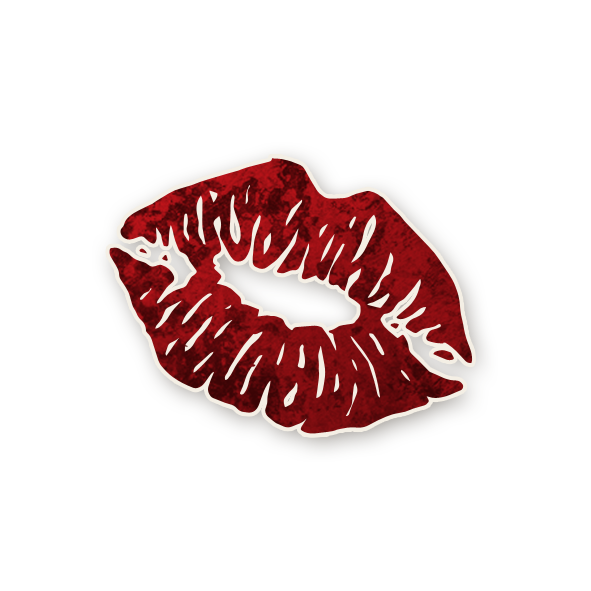
The Scarlet Woman is implied to be a sex worker based on the visual of the lipstick mark on the token. In christianity, the scarlet woman is seen as impure and unholy in nature. This feeds into the religious ties to sacrifice and possession. As the Scarlet Woman is able to become the demon if the demon is killed, ending the game. Letting the demon sacrifice their current vessel for one that is considered unholy, mirrors some of the ideas found related to the whore of Babylon (Johnson, 2023). This possession lets the minions take back the power and spread doubt that the demon was truly killed.
Demon
-

Imp
The Imp is the only demon in Trouble Brewing. This demon has religious ties to the devil seen in christianity as well as some celtic folklore. The game uses death, possession, sacrifice and deception as a way of highlighting these connections. The Imp’s ability shows its death heavy connections as the demon has to attack a player (living or dead) every night after night 1. When attacking a dead player, it will be announced to the rest of the town no one died that night. This can be used to deceive players into thinking characters with protection abilities worked. One special thing about the Imp is that it can attack themselves at night, which would lead to them dying and a living minion will be possessed by the Imp that night. This brings a whole other level to the evil team’s opportunities for deception as a death in the night (especially in trouble brewing) normally implies the newly dead player is good. These ideas of death, possession and sacrifice from a gameplay perspective, all boil down to trickery and deception, something in folklore Imp’s are known for(Monaghan, 2008). The Devil is also known for deception and trickery seen in the New Testament describing the devil as a trickster and deceiver (Genesis 3:1-24). The Imp in blood on the clocktower has a visual connection to the devil with the red pitchfork on its token.
The Imp’s religious references lie within its playstyle, being manipulative and deceitful. But with the use of its ability to possess one of its living minions, this demon creates potential for bigger bolder plays normally not seen from other characters like this in other social deduction games. Pushing the limits and meta’s within the genre.
Clue Up
This Script is an amazing introduction to Ravenswood Bluff and Blood on the Clocktower as a whole. The religious and mythical ties to good vs evil, death, deception, sacrifice, judgment, hidden knowledge, helps enhance and gameplay the story and allows for these more classic abilities to feel more elevated. Trouble Brewing’s simplicity with characters and abilities in comparison the other two starting scripts really helps make the game with a board the size of the average laptop feel less intimidating and provides a great gateway to experiment with strategies before trying the more complex scripts.